
Norway History Timeline: Vikings, Independence and Modern Norway
A student-friendly guide to Norway's history, from the Viking Age and the union with Sweden to independence, World War II and the oil era.
Ler em portuguêsFrom the Viking Age to modern Norway
Norway's history includes exploration, political unions, independence, resistance and major economic transformation.
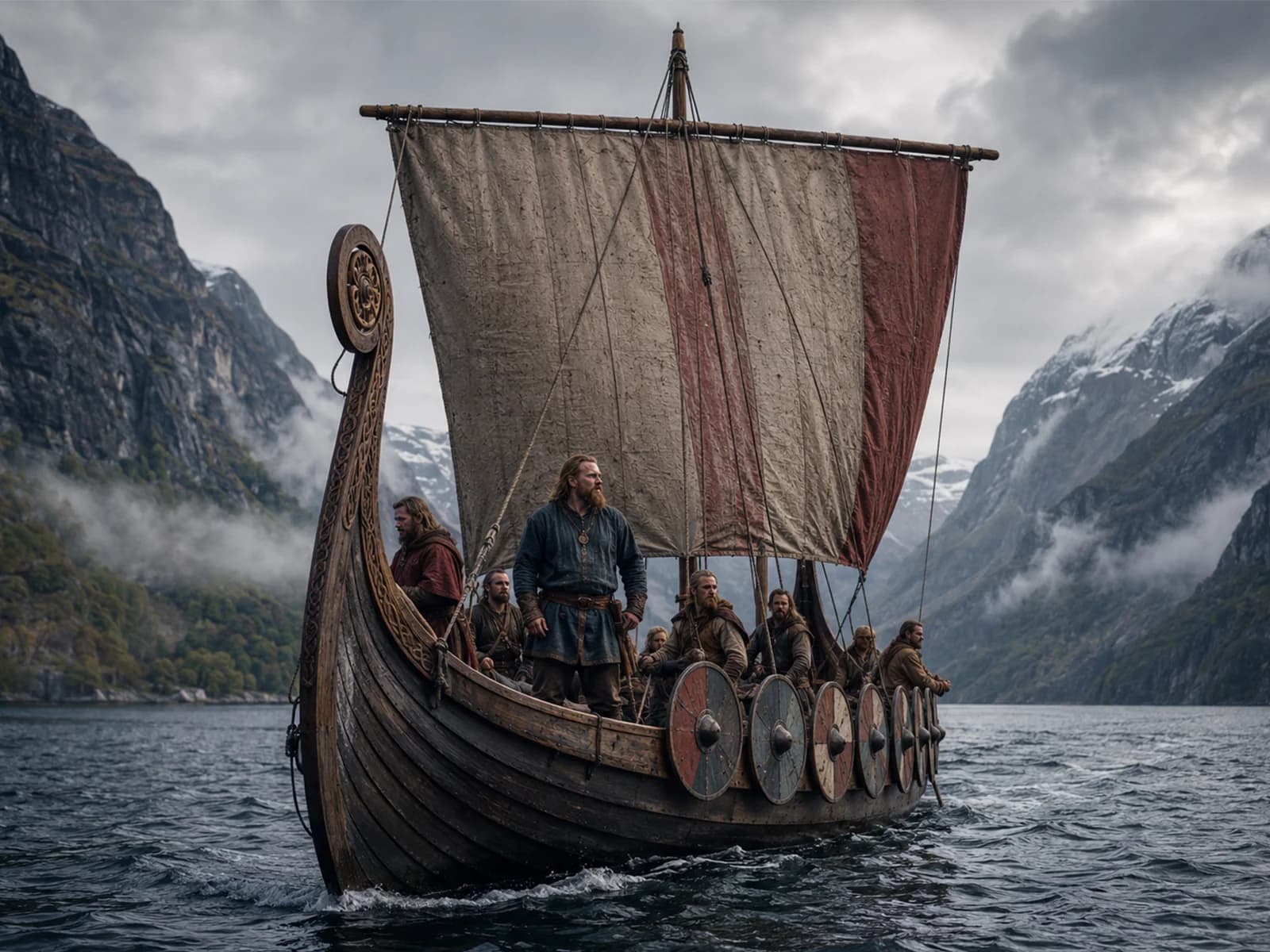
During the Viking Age, Norwegian explorers, traders and settlers travelled across Europe and the North Atlantic, reaching places such as Iceland, Greenland, Ireland and parts of Britain.
Independence and national identity
Norway entered a political union with Sweden in 1814 while keeping its own Constitution and Parliament.
On 7 June 1905, the Norwegian Parliament declared the union dissolved. Sweden officially recognised Norwegian independence on 26 October 1905.
War, oil and prosperity
During the Second World War, Nazi Germany invaded Norway in 1940, while the government and royal family continued resisting from exile until liberation in 1945.
In the late twentieth century, oil and gas discoveries in the North Sea transformed Norway into one of the world's most prosperous countries.
Quick questions
What is the Viking Age in Norway?
The Viking Age was a period from the late eighth century to the eleventh century when Norwegian Vikings explored, traded and settled across Europe and the North Atlantic.
When did Norway become independent?
Norway became fully independent in 1905 after the union with Sweden was dissolved.